


Administrative Fairness
Mandate
Ombud NB receives and investigates complaints from individuals who have had difficulty or feel they have been treated unfairly in their interactions with public authorities. The Ombud’s role is to ensure fairness in administrative processes and policies.
Notices
Information About Fairness
Although we all may have an instinctive sense of what fairness is, it can be a difficult concept to define, and there are often different views of the requirements of fairness in any particular case.
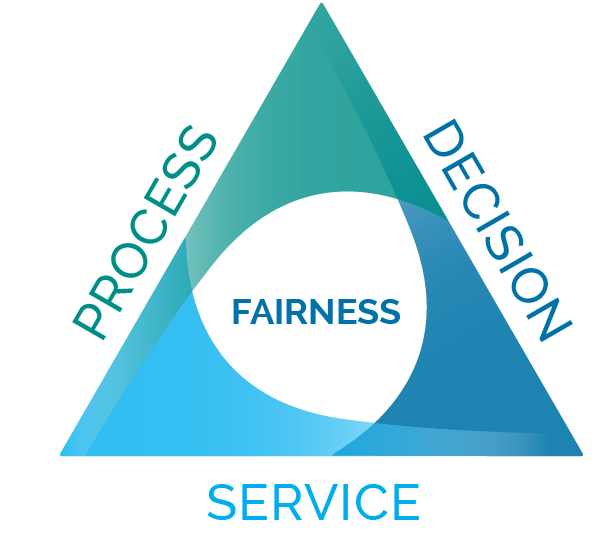
In relation to Ombud work, fairness focusses on three aspects shown in the Fairness Triangle below.
Fair Process
Public organizations must follow fair decision-making processes when making decisions that directly impact a person, group of people or organization. This includes meeting the duty of procedural fairness owed to those impacted by a decision. The duty of procedural fairness has two key elements:
- Right to be heard: Those directly impacted by a decision should have an opportunity to understand and meaningfully participate and be heard in the decision-making process.
- Right to an impartial decision maker: The decision maker must have an open mind, be unbiased and not prejudge the decision they will make.
Fair Decision
Public organizations must make fair decisions. Fair decisions follow the applicable rules, consider the individual circumstances and case, are equitable and reflect a fair exercise of discretion. Public organizations should ensure they have policies and processes that support making fair decisions.
Fair Service
Public organizations must treat people fairly. Fair service is about how people are treated when they access public programs and services. It includes ensuring the public organization provides respectful, accessible and responsive service and is accountable to the public it serves.

Information about the Ombud’s jurisdiction
For administrative fairness complaints, the Ombud can receive complaints and investigate the following types of organizations:
- Government departments
- Municipalities
- School districts
- District education councils
- Regional health authorities
- Crown agencies
- Agencies responsible to the Province including commissions and boards
If your complaint involves an organization that we do not have the authority to investigate we may refer you to another office that may be able to help with your complaint, such as:
- New Brunswick Human Rights Commission
- College of Physicians and Surgeons of New Brunswick
- Law Society of New Brunswick
- New Brunswick Police Commission
If you are not sure whether or not we can investigate your complaint, please contact us anyway. If we can’t help, we will assist you in finding the places where you might be able to get additional help.
The Ombud has no jurisdiction to investigate the following types of organizations:
- Courts, including actions of judges and lawyers acting on behalf of the government
- Federal government and agencies (including the RCMP)
- Private companies or individuals
- Doctors and lawyers
- Unions
- Surveyors and real estate agents
The Ombud does not have the authority to investigate:
- any matter where there is a right to appeal or right to a review by a court or tribunal that has not yet been exercised
- any matter that involves the actions of a solicitor or legal counsel for a public sector organization
- any matter that is being or has been investigated or reviewed by the Child, Youth and Senior Advocate or the New Brunswick Human Rights Commission
The Ombud can make recommendations to public organizations when an administrative error is found or a process improvement could be made. The Ombud also has the power to make public reports to bring issues to light.
While the Ombud does not have the power to force an organization to make the changes they recommend, most organizations abide by the recommendations made by the Ombud. The Ombud may also monitor the progress made on the implementation of their recommendations and report publicly on that progress.
Information About Complaints
Anyone who believes they have been treated unfairly by a provincial public sector organization can make a complaint to the Ombud.
This includes people who are not Canadian citizens or residents of New Brunswick, as long as the issue they are experiencing is with a public sector organization in New Brunswick.
If the complaint is within the Ombud’s jurisdiction, our first objective will be to try to resolve the complaint informally and as early as possible. We believe everyone benefits from a complaint process that is genuinely geared to finding practical solutions to resolve the problems people have encountered.
If we cannot resolve a complaint informally, the matter will be referred to the Ombud to decide if a formal investigation is warranted.
In some circumstances, the Ombud may decide not to investigate, including:
- if the complaint is trivial, frivolous, vexatious or not made in good faith
- if it relates to a matter that the complainant knew about for more than a year prior to making the complaint
- if the complainant does not have a sufficient personal interest in the subject matter of the complaint – meaning that the problem did not happen to them personally
- if, after weighing the public interest and the interests of the complainant, the Ombud is of the opinion that the complaint should not be investigated
Organizations are not automatically notified if someone contacts us for general information about a given process. Many complaints can be resolved informally by working with the complainant to understand their concerns. We will contact a public organization as we attempt to resolve a complaint informally. If it appears that the complaint cannot be resolved informally and may proceed to a formal investigation, the Ombud has to notify Administrative Head of the organization formally.
Information for Public Organizations
Although we all may have an instinctive sense of what fairness is, it can be a difficult concept to define, and there are often different views of the requirements of fairness in any particular case.
In relation to Ombud work, fairness focusses on three aspects shown in the Fairness Triangle below.
Fair Process
Public organizations must follow fair decision-making processes when making decisions that directly impact a person, group of people or organization. This includes meeting the duty of procedural fairness owed to those impacted by a decision. The duty of procedural fairness has two key elements:
- Right to be heard: Those directly impacted by a decision should have an opportunity to understand and meaningfully participate and be heard in the decision-making process.
- Right to an impartial decision maker: The decision maker must have an open mind, be unbiased and not prejudge the decision they will make.
Fair Decision
Public organizations must make fair decisions. Fair decisions follow the applicable rules, consider the individual circumstances and case, are equitable and reflect a fair exercise of discretion. Public organizations should ensure they have policies and processes that support making fair decisions.
Fair Service
Public organizations must treat people fairly. Fair service is about how people are treated when they access public programs and services. It includes ensuring the public organization provides respectful, accessible and responsive service and is accountable to the public it serves.
The Ombud can make recommendations to public organizations when an administrative error is found or a process improvement could be made. The Ombud also has the power to issue public reports to bring issues to light.
While the Ombud does not have the power to force an organization to make the changes they recommend, most organizations abide by the recommendations made by the Ombud. The Ombud may also monitor the progress made on the implementation of their recommendations and report publicly on that progress.
Organizations are not automatically notified if someone contacts us for general information about a given process. Many complaints can be resolved informally by working with the complainant to understand their concerns. We will contact a public organization as we attempt to resolve a complaint informally. If it appears that the complaint cannot be resolved informally and may proceed to a formal investigation, the Ombud has to notify Administrative Head of the organization formally.